Design Sprint

Five days to move from opinion to evidence, before you fund the build. 

Book A Call

Investment

$25k

Duration

5 Days

From Real Users

Validated Prototype

WHY A DESIGN SPRINT

Evidence Before The Budget Commits.

Meet Our Client: Will Bowen Interview

Will Bowen

| CEO Givebacks

Digital programs are rarely lost in development. They are lost in the months before it, in stakeholder debate, competing priorities, and requirements built on assumptions nobody has tested. Work starts anyway, because a decision has to be made and there is no evidence to make it with.

A Design Sprint replaces that with five days and a working prototype your customers have actually used.

How the five days work

A Proven Method, Tailored To Your Needs.

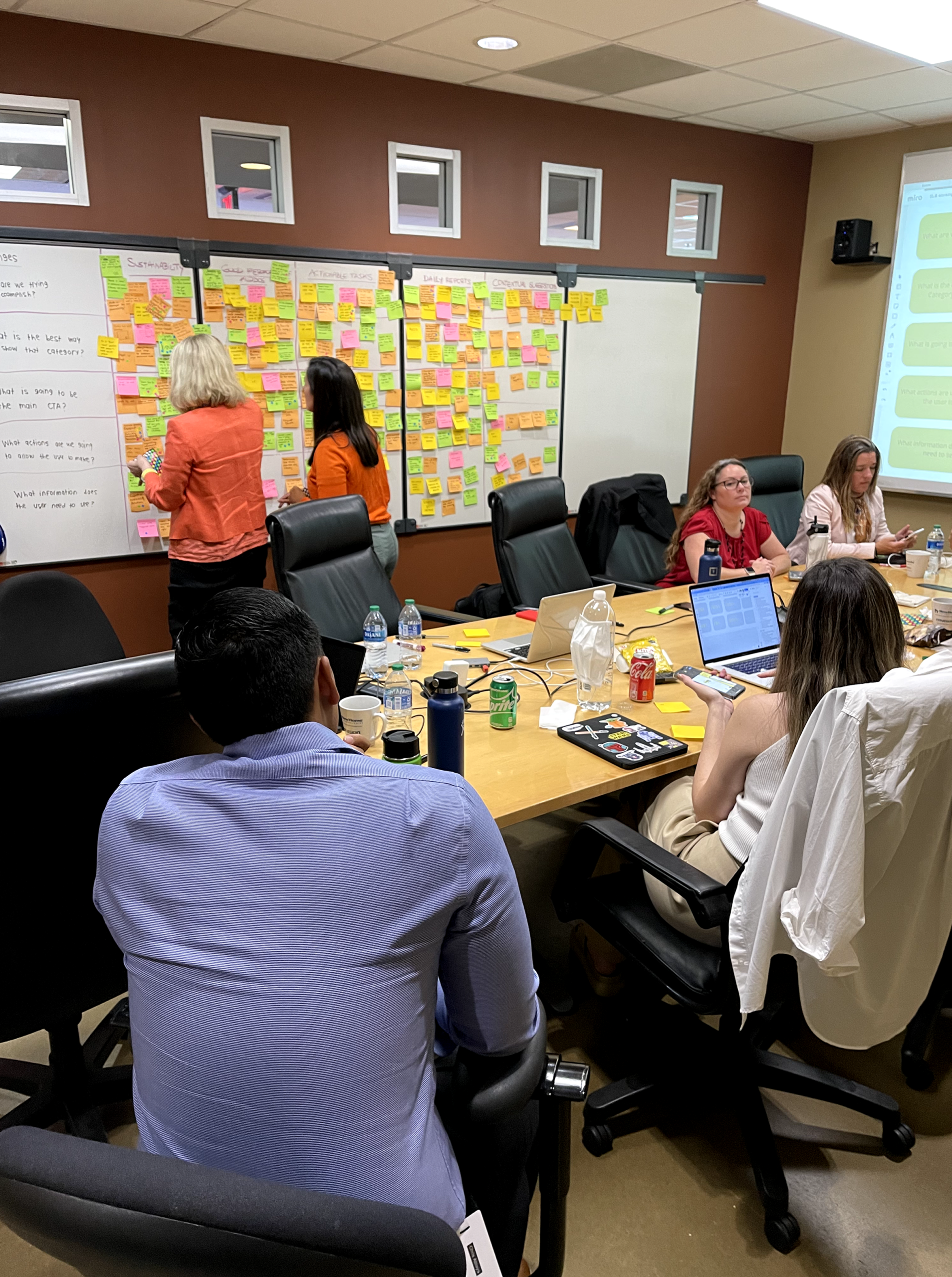
Every sprint is planned around your team's context and goals: the exercises, the people we bring, and how the week is shaped. Five consecutive days is typical, with your heaviest involvement in the first two or three and daily check-ins after that.

If you don't yet know how to solve the problem, more of the week goes to exploring approaches. If you already have an idea to test, more of it goes to refining and validating.
DAY 1

Define

Frame the challenge and agree what success looks like.


DAY 2

Explore

Everyone in the room produces a solution, not only the most senior voice.


Day 3

Decide

One direction is chosen by a decision-maker, not by committee.


Day 4

Prototype

Your team returns to normal work while we create a realistic prototype.


Day 5

Validate

Put in front of real users and customers and get feedback.


What's included

A Validated Concept, And The Proof Behind It.

A working prototype of the idea

Five to seven key screens, clickable and realistic enough that customers react to it as though it were real. The design work that follows starts from a proven direction.

Proof from your customers, not opinions

Recorded sessions and a readout of what they actually did and said when they used it.

A clear recommendation

Build it, change it, or stop, with the reasoning documented well enough to take to your board.

A plan and a number

A phased roadmap and a rough order of magnitude cost for what comes next, ready for a funding conversation.

A shared picture of the problem

Journey map, storyboard, and the metrics everyone agreed to on day one.

Is this the right call

A Sprint Is Not Always The Answer.

Common questions

What Teams Ask Before They Book.

Can a Design Sprint run remotely?

Yes. A remote sprint runs the same five phases spread across two to three weeks, with shorter daily sessions instead of five consecutive full days.

We bring stakeholders together to tackle a critical business challenge by following a structured, time-boxed approach. Over the course of several days, the team aligns on the core problem, sketches possible solutions, decides on a direction, builds a realistic prototype, and tests it with real users. This focused environment encourages rapid decision-making and human centered innovation.

A repeatable, step-by-step framework for solving problems and testing ideas quickly. Developed at Google Ventures, it combines elements of design thinking and agile development into a five-phase process: Understand, Diverge, Converge, Prototype, and Test. This approach is ideal for teams that need clarity and momentum before committing to full-scale development.

The design sprint process typically unfolds in five phases:
• Define the problem and align the team on goals.
• Explore a wide range of ideas through sketching and brainstorming.
• Choose the best ideas and develop a clear concept.
• Build a realistic, testable prototype of the concept.
• Gather feedback from real users to validate or refine the solution.

This process condenses months of work into a single week of intense collaboration.

Traditionally, a design sprint lasts five consecutive days. Depending on the project scope and availability of stakeholders, it can be adapted into shorter formats (like 3-day or 4-day sprints) or spread out no more than a couple of weeks in a remote or hybrid setting. The key is maintaining momentum and decision-making discipline throughout.

Design Sprint is about testing ideas fast through real customer feedback. Agile is about building and delivering the validated solution from the Design Sprint though iterative development sprints.

While Design Sprints definitely speed things up considerably, but they are not about building a finished product within one week. There could be confustion for those who know the term “sprint” from agile development frameworks like Scrum, where things actually get build over multiple iterations. What you work on in the first iteration of a Design Sprint is to define core ideas and features, strategy and unique value proposition for your product to scale on.

You can absolutely practice and implement Design Sprint solutions into your internal workflows. The problem with anything that requires creative thinking is that it’s easy to get lost, lose focus and fall into the trap of having useless, open-ended, unstructured discussions. Many products end up being released late and full of compromises to the original vision simply because the team is so fatigued from bashing heads together on endless, unprioritised problems. The team has been fighting in the trenches for too long, and people begin to sabotage each other to promote their own ideas, whether they are “good” or not. An outside group is often able to baypass those internal challenges, help bring dicipline approaches and jumpstart innovation and product focus.

On existing products, the results from a design workshop & sprint could be immediately implementable into the production pipeline. On brand new products, you will want to do a follow on sprint to polish things up and validate them, and then you can plug it into your agile or waterfall system as appropriate. At EX Squared we are able to work from sprints all the way through helping you build your final product and launch it with promotional materials. We also recommend having an “internal roadshow” at the company, to get the broader organization to understand how you arrived at your insights by taking the company on the same journey that the sprint team went through.

Digital Experiences

Related Services

Experience Design

Discovery, prototyping, design systems, and user testing.

Explore

Strategy & Ideation

Research and validation that builds the roadmap before budget commits.

Explore

DXP

Sitecore and Optimizely platforms, built new or taken over and stabilized.

Explore

Talk With Us

Tell us what you're working on. We'll ask questions, then come back with a straight view on what's worth doing, including if the answer is not yet.

Prefer to start with a call?

Book A Call