$25k
5 Days
Validated Prototype
WHY A DESIGN SPRINT
Evidence Before The Budget Commits.
Meet Our Client: Will Bowen Interview
Will Bowen
| CEO Givebacks
Digital programs are rarely lost in development. They are lost in the months before it, in stakeholder debate, competing priorities, and requirements built on assumptions nobody has tested. Work starts anyway, because a decision has to be made and there is no evidence to make it with.
A Design Sprint replaces that with five days and a working prototype your customers have actually used.
How the five days work
A Proven Method, Tailored To Your Needs.
Every sprint is planned around your team's context and goals: the exercises, the people we bring, and how the week is shaped. Five consecutive days is typical, with your heaviest involvement in the first two or three and daily check-ins after that.
If you don't yet know how to solve the problem, more of the week goes to exploring approaches. If you already have an idea to test, more of it goes to refining and validating.
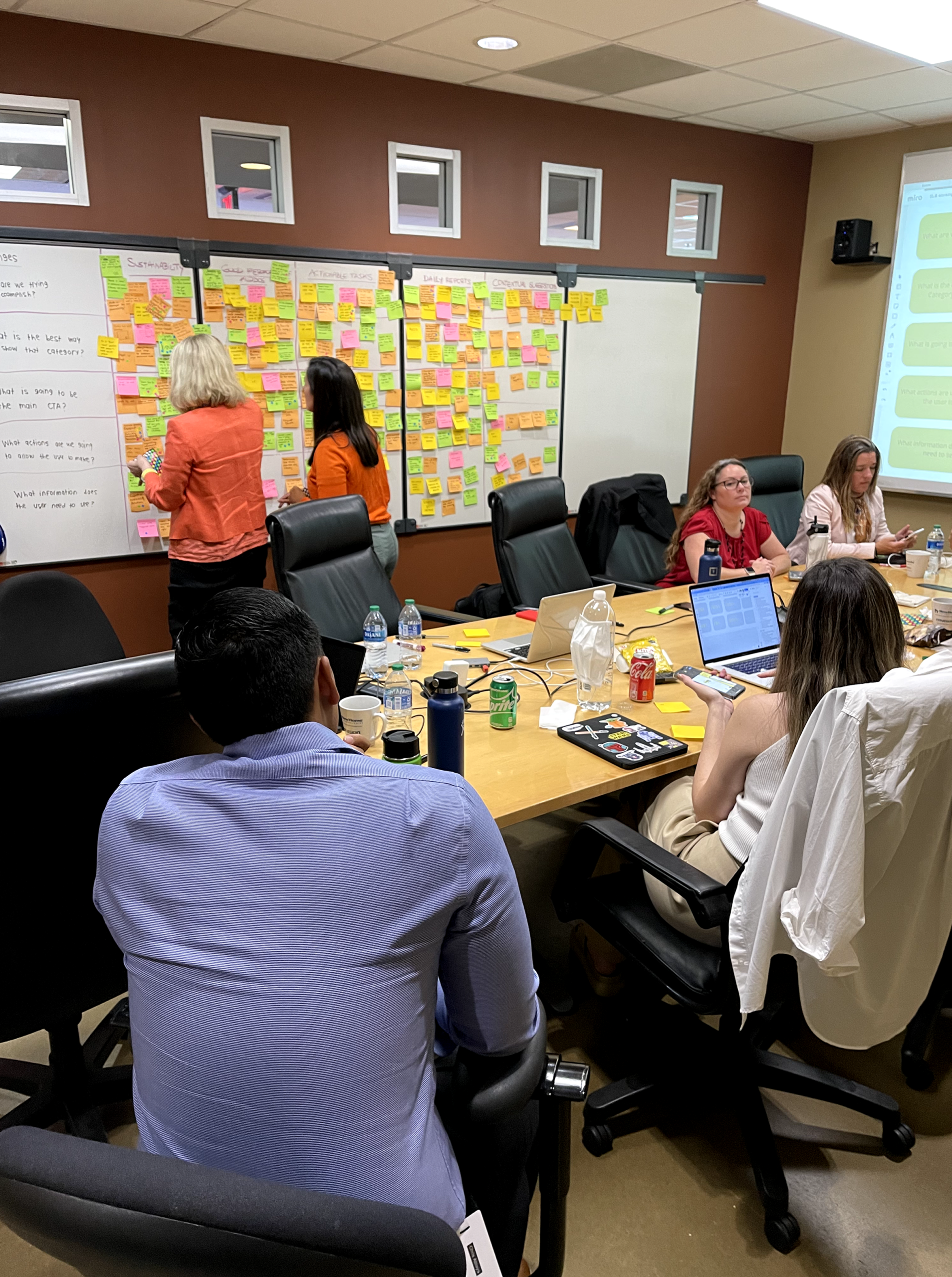
DAY 1
Define
Frame the challenge and agree what success looks like.
DAY 2
Explore
Everyone in the room produces a solution, not only the most senior voice.
Day 3
Decide
One direction is chosen by a decision-maker, not by committee.
Day 4
Prototype
Your team returns to normal work while we create a realistic prototype.
Day 5
Validate
Put in front of real users and customers and get feedback.
What's included
A Validated Concept, And The Proof Behind It.
A working prototype of the idea
Five to seven key screens, clickable and realistic enough that customers react to it as though it were real. The design work that follows starts from a proven direction.
Proof from your customers, not opinions
Recorded sessions and a readout of what they actually did and said when they used it.
A clear recommendation
Build it, change it, or stop, with the reasoning documented well enough to take to your board.
A plan and a number
A phased roadmap and a rough order of magnitude cost for what comes next, ready for a funding conversation.
A shared picture of the problem
Journey map, storyboard, and the metrics everyone agreed to on day one.
Is this the right call
A Sprint Is Not Always The Answer.
Common questions
What Teams Ask Before They Book.
Digital Experiences
Related Services
Talk With Us
Tell us what you're working on. We'll ask questions, then come back with a straight view on what's worth doing, including if the answer is not yet.
Prefer to start with a call?
Book A Call